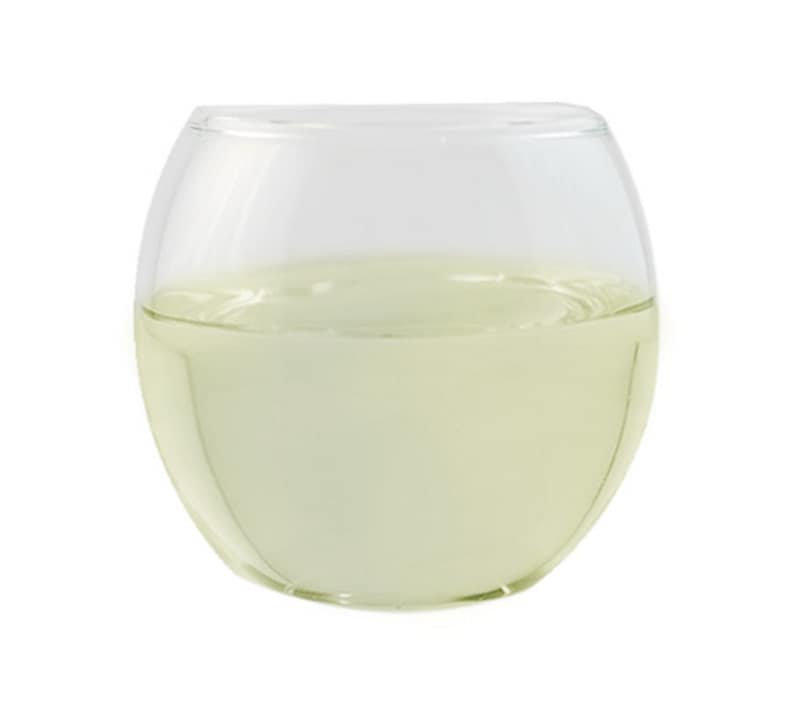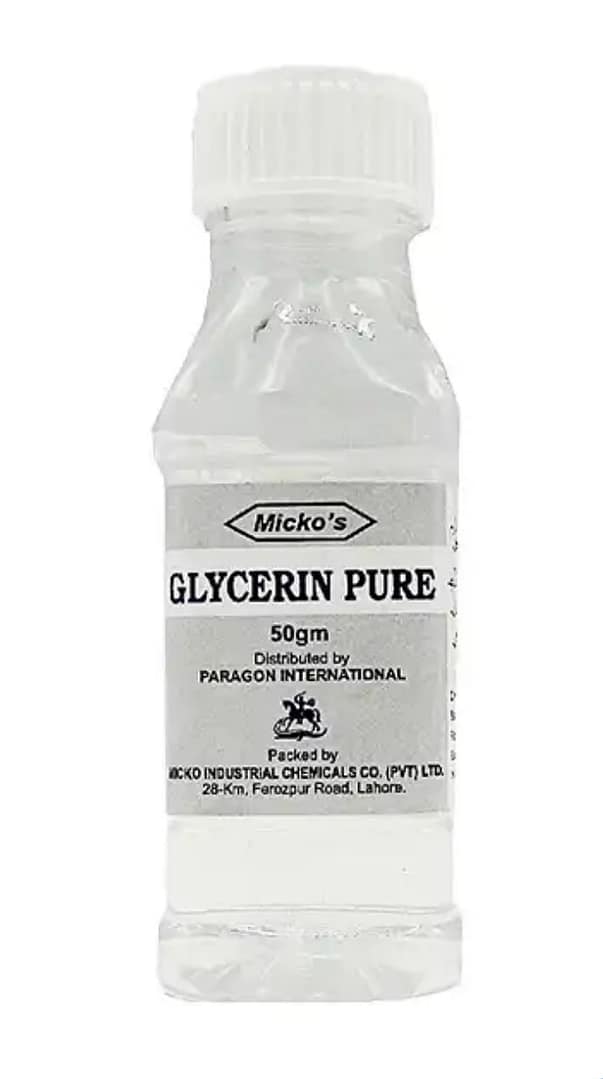
If cosmetic ingredients had a VIP lounge, glycerin would be lounging in cashmere joggers with a glass of iced water — calm, reliable, and somehow in every single party pic. It’s the humectant that doesn’t chase hype but still gets into everything from $120 creams to your grandma’s old Neutrogena.

Where Glycerin Actually Comes From
Glycerin (also glycerol) was first produced way back in 1779 by Swedish chemist Carl Wilhelm Scheele in the process of heating olive oil with lead oxide. Yes, it was that long ago.
It occurs naturally in fats and oils (animal or plant) and today is mostly made from plant oils like palm, coconut, or soy.
You can also get synthetic glycerin in a lab, technically vegan and identical chemically, but plant-sourced is more common in skincare.

What It Actually Does in Your Skincare
Glycerin’s claim to fame is hydration, and it does this by being a humectant (aka a moisture magnet). It pulls water toward the skin’s surface from the environment and deeper layers so you stay soft instead of dehydrated.
Here’s the breakdown:
- Draws water into stratum corneum (outer layer of skin) to help it stay hydrated and plump.
- Helps keep the skin’s moisture barrier working properly.
- Aids in smoothing texture and boosting elasticity.
- Helps improve performance of other ingredients by keeping skin hydrated.
Because it’s water-loving and gentle, it’s found in everything from toners and creams to makeup removers, sunscreens, and yes, even makeup formulas.

The Pros: Why Glycerin Deserves a Standing Ovation
✅ Works for basically all skin types.
✅ Non-comedogenic — won’t clog pores.
✅ Strengthens your skin barrier with consistent use.
✅ Compatible with any ingredient imaginable.
✅ Safe and well-studied — cosmetic safety panels call it safe, even at high concentrations.
Most people can use glycerin daily, even those with sensitive or mature skin.

The Cons: Not Perfect (But Also Kind of Perfect)
Glycerin is generally very well tolerated, but nothing is completely drama-free when it comes to skincare.
⚠️ Possible quirks:
- Can feel sticky if the concentration is high.
- In very dry climates, humectants like glycerin can theoretically pull water from deeper skin layers if humidity is low, so layer with an occlusive if you’re in a desert.
- Rare allergic reactions or redness are possible, though uncommon.
- In its pure form, glycerin isn’t always the best idea unless it’s diluted properly or used with other moisturizing oils/occlusives.
None of these are makeup-ending revelations but more like “wear sunscreen” kind of warnings.

Scandals (Because We Live for Them)
Let’s be honest: glycerin is so safe and uneventful that the only possible eyebrow-raises come from sourcing and context:
- Animal vs plant vs synthetic sources. Most cosmetic glycerin is plant-derived, but animal-derived glycerin exists and might upset ethical vegans.
- Pure glycerin misuse (like applying undiluted in inappropriate ways) can irritate or dehydrate skin. It’s not a scandal, but it’s enough drama to make ingredient bloggers clutch pearls.
No lawsuits, no ingredient bans, no internet conspiracy buffalo running through it. Glycerin is basically the saint of skincare ingredients.

In Real Skincare Routines, Glycerin Is Everywhere
Dermatologists report glycerin is in thousands of products because of its hydration and formulation benefits which is second only to water in prevalence.
You’ll find it in cleansers, mists, serums, lotions, sunscreens, and even makeup because hydrating formulas = happier skin and smoother application.

Bottom Line: Glycerin Is the Quiet MVP
In a world of flashy buzzword ingredients, glycerin is the one that always shows up, always hydrates, and always keeps your skin looking less sad. Not glamorous, not sexy, just consistently effective, and honestly, that’s literally the skincare version of “rich without saying a word.”
Hydration is wealth. And glycerin? It’s silently wealthy.
Further Reading:
INCI Page (January 5, 2023). “Glycerin.” SpecialChem. https://www.specialchem.com/cosmetics/inci-ingredients/glycerin
Levey, D.K. (February 3, 2025). “What is glycerin: Neutrogena skincare glossary.” Neutrogena. https://www.neutrogena.com/the-bar/skincare-glossary/glycerin
The Ingredient Gallery (n.d.). “Plant glycerin.” Origins. https://www.origins.com/ingredient-gallery/glycerin?srsltid=AfmBOoqBbK_kraUFHTfzQv3mYdrXlv00BkwzHhrwGvugDAw8SPiQWdgS
Price, D. (May 28, 2024). “A Guide to Glycerin for Skin, According to Dermatologists.” Good Housekeeping. https://www.goodhousekeeping.com/beauty/anti-aging/a60803474/glycerin-skin/?utm_source=google&utm_medium=cpc&utm_campaign=mgu_ga_ghk_md_pmx_hybd_mix_us_19597983321&gad_source=1&gad_campaignid=19597985697&gbraid=0AAAAADA2MEo09gZIyh50DEnMjvNnK1uZZ&gclid=Cj0KCQiA4eHLBhCzARIsAJ2NZoK2ZOJ6e0svrDp5RO4i1OgqVcCPIceMr9KLxVsGUVDWEaYu8zbUZRAaAnL8EALw_wcB
Becker, L.C., Bergfeld, W.F., Belsito, D.V., et al. (2019). Safety assessment of glycerin as used in cosmetics. International Journal of Toxicology, 38, 6-22. https://pubmed.ncbi.nlm.nih.gov/31840548/
Safety Information (n.d.). “Glycerin.” Cosmetics Info. https://www.cosmeticsinfo.org/ingredient/glycerin/
Ingredient Library (n.d.). “Glycerin in Cosmetics: Any Adverse Effects?” Typology Paris. https://us.typology.com/library/glycerin-in-cosmetics-any-adverse-effects
Shruthi, N. (December 9, 2025). “What Is Glycerin Used For? Uses, Benefits and Side Effects.” Medicine Net. https://www.medicinenet.com/what_is_glycerin_used_for_uses_benefits/article.htm
Frrothingham, S. (March 15, 2023). “Is Glycerin Good For Your Skin and Face?” Healthline. https://www.healthline.com/health/glycerin-for-face