
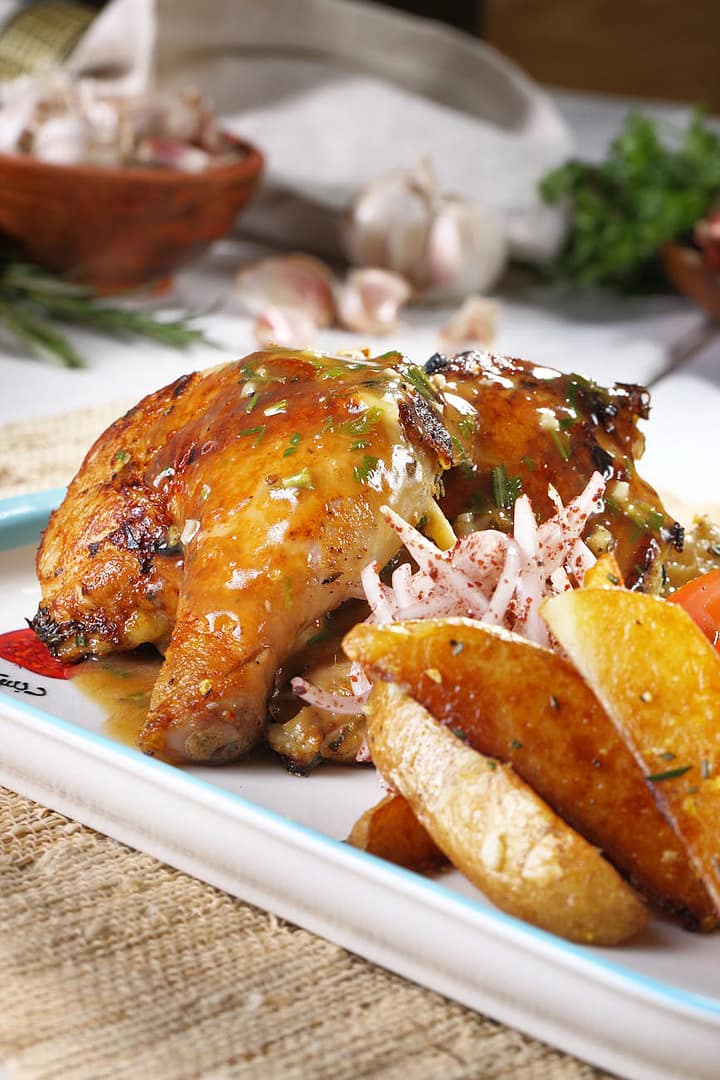
There are two kinds of people in this world: those who choose chicken breast, and those who understand that chicken thigh fillets are the superior life form.
If chicken were a high school movie, breasts would be the popular cheerleaders: lean, bland, conventionally attractive, and slightly boring. Thigh fillets would be the brooding indie girl who writes poetry, drinks oat milk before it was trendy, and quietly steals every scene. You didn’t notice her at first, but now you can’t shut up about her.
Let’s unpack why chicken thigh fillets deserve a standing ovation.

What Exactly Is a Chicken Thigh Fillet?
A chicken thigh fillet is the boneless, skinless portion of the upper leg of a chicken. It’s what you get when someone does the labor-intensive task of removing the bone and usually the skin, leaving behind a tender, juicy slab of dark meat perfection.
In simpler terms:
It’s the best part of the chicken, minus the annoying bits.
Unlike chicken breast, which is lean to the point of emotional detachment, thigh meat contains more fat, connective tissue, and flavor. This means it stays juicy even if you accidentally overcook it while scrolling TikTok.

Origins: Chickens and the Dawn of Domesticated Deliciousness
Chickens were domesticated over 8,000 years ago, originating primarily from the red junglefowl in Southeast Asia. Early humans quickly realized two important things:
- Chickens are easy to raise.
- Chickens are delicious.
Originally, chickens were kept more for rituals, sport, and eggs than meat. But eventually, humans did what humans always do: optimized the situation for eating.
Historically, dark meat was prized. Thighs and legs were seen as richer, more satisfying, and more flavorful. It’s only in modern Western dieting culture that chicken breast became the uncontested queen, thanks to protein obsession, low-fat moral superiority, and gym culture.
In other words:
Our ancestors were thigh people. We strayed. They knew better.

A Brief History of How Thighs Lost Their Crown
Somewhere between the invention of calorie counting and the rise of the protein shake, chicken breast became synonymous with “healthy.” It’s lean, bland, and easy to track in a food app. Thighs, with their slightly higher fat content, were cast as the indulgent cousin.
This is tragic, because fat equals flavor, and flavor equals joy, and joy equals quality of life. (This is peer-reviewed by me.)
Globally, however, chicken thighs never fell out of favor. In Asian, Middle Eastern, African, Latin American, and Mediterranean cuisines, thighs remain the gold standard for braising, roasting, grilling, frying, and stewing.
America just needed to emotionally mature.

Why Chefs and Home Cooks Love Chicken Thigh Fillets
Chicken thigh fillets are culinary shapeshifters. They work in nearly every cooking method and cuisine:
🔥 High-Heat Cooking
- Pan-seared
- Stir-fried
- Grilled
- Broiled
Thigh fillets thrive under high heat because their fat keeps them juicy. They don’t punish you for looking away for 30 seconds.
🥘 Low & Slow Cooking
- Braises
- Curries
- Soups
- Stews
The connective tissue breaks down beautifully, creating tender, melt-in-your-mouth meat.
🌮 Global Cuisine Royalty
- Thai basil chicken
- Indian butter chicken
- Mexican tinga
- Japanese karaage
- Mediterranean kebabs
- Southern fried chicken
Chicken thigh fillets are basically the international diplomats of protein.

Texture & Flavor: The Main Event
This is where thighs body-slam breasts into oblivion.
Flavor
Thigh meat is richer, deeper, and more savory. There’s an actual chicken flavor, not just a vague protein placeholder vibe.
Texture
Juicy. Tender. Forgiving. Slightly springy in the best way. They don’t turn into sawdust the second they’re cooked past perfection.
If chicken breast is the beige sofa of proteins, chicken thigh fillets are the velvet emerald couch you didn’t know you needed but now refuse to live without.

Nutritional Profile: Not the Villain You Were Taught to Fear
Yes, thighs have more fat than breast. No, this is not a moral failing.
Per 100g (approximate):
- Calories: ~170
- Protein: ~24g
- Fat: ~9g
- Iron: Higher than breast
- Zinc: Higher than breast
- B vitamins: More abundant
That extra fat:
- Improves satiety
- Enhances flavor
- Helps absorb fat-soluble vitamins
- Makes food actually enjoyable
We are not afraid of fat in this house.

Pros of Chicken Thigh Fillets
Let us count the ways.
✔ Flavor Bomb
Objectively tastier than chicken breast.
✔ Forgiving to Cook
They stay juicy even if slightly overcooked.
✔ Budget-Friendly
Usually cheaper than breasts.
✔ Versatile AF
Works in nearly every cuisine and cooking style.
✔ Nutrient Dense
More iron, zinc, and B vitamins.
✔ Meal Prep Champion
They reheat beautifully without turning into rubber.
Basically, chicken thigh fillets are the emotionally supportive friend of your weekly meal rotation.

Cons of Chicken Thigh Fillets (Yes, There Are Some)
I believe in journalistic integrity.
❌ Slightly Higher Fat & Calories
If you’re on a medically necessary low-fat diet, thighs may not be ideal.
❌ Texture Bias
Some people prefer the firmer, drier texture of breast. (I don’t understand them, but I respect their journey.)
❌ Trim Work
Occasionally, thigh fillets contain excess fat or connective tissue that needs trimming.
❌ Uneven Sizing
They’re less uniform than breasts, which can complicate cooking times if you’re not paying attention.
Still: worth it.

Ethical, Environmental & Health Concerns
Because I am nothing if not thoughtful.
🐔 Animal Welfare
Industrial chicken farming raises legitimate ethical concerns:
- Overcrowding
- Rapid growth breeding
- Poor living conditions
If possible, choose free-range, organic, or pasture-raised chicken. Yes, it costs more. Yes, it’s worth it.
🌎 Environmental Impact
Chicken has a lower carbon footprint than beef or lamb, making it a more climate-friendly meat choice. Thigh fillets don’t change that equation much.
🧪 Antibiotics & Hormones
In the U.S., hormones are illegal in poultry, but antibiotics may still be used. Look for:
- “No antibiotics ever”
- USDA Organic certification
🦠 Food Safety
Thigh fillets, like all raw poultry, can harbor salmonella and campylobacter. Translation: don’t cross-contaminate your cutting board, and cook to 165°F (74°C).

Cultural Reputation: From Humble Cut to Star Ingredient
For years, thighs were treated as second-tier chicken. Now? They’re having a full renaissance.
Food bloggers, chefs, TikTok cooks, and recipe developers overwhelmingly favor thighs because:
- They’re harder to mess up.
- They taste better.
- They make home cooks feel successful.
In a world where everything is hard, chicken thigh fillets are a tiny act of kindness toward yourself.

Final Verdict: The Chicken Thigh Fillet Supremacy Agenda
Chicken thigh fillets are:
- More flavorful
- More forgiving
- More affordable
- More versatile
- More emotionally satisfying
They are the anti-diet-culture protein, the cozy sweater of your fridge, the food equivalent of canceling plans and staying home with a candle and a comfort show.
If chicken breast is discipline, chicken thigh fillets are joy.
And frankly, we deserve joy.
Further Reading:
Food and Agriculture Organization of the United Nations. (2026). Animal Production and Health Division (NSA). https://www.fao.org/agriculture/animal-production-and-health/en
Zelman, K.M. (2024). Health Benefits of Chicken. WebMD. https://www.webmd.com/diet/health-benefits-chicken
Laatsch, D.R. (n.d.). Origin and History of the Chicken. University of Wisconsin-Madison. https://livestock.extension.wisc.edu/articles/origin-and-history-of-the-chicken/
National Chicken Council. (2025). Questions and Answers About Antibiotics in Chicken Production. https://www.nationalchickencouncil.org/questions-answers-antibiotics-chicken-production/
Nutrifox (2026). Chicken, broilers or fryers, thigh, meat only, cooked, roasted. https://nutrifox.com/nutrition/chicken-broilers-or-fryers-thigh-meat-only-cooked-roasted
United States Department of Agriculture. (2024). Chicken from farm to table. https://www.fsis.usda.gov/food-safety/safe-food-handling-and-preparation/poultry/chicken-farm-table
World Health Organization. (2020). Critically important antimicrobials for human medicine (6th rev.). https://www.who.int/publications/i/item/9789241515528


1 thought on “Chicken Thigh Fillets: The Underrated Main Character of Your Dinner Plate”