
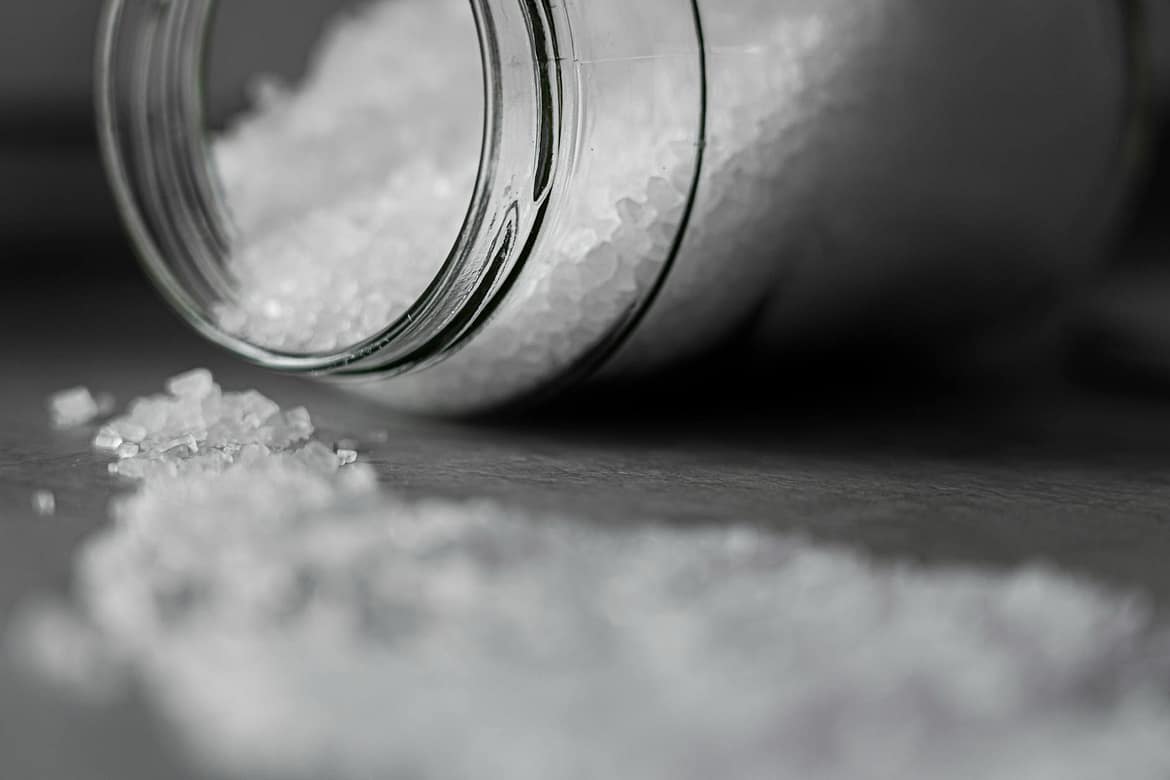
Let’s get one thing straight: table salt is Regina George. It’s everywhere. It’s powerful. It shapes society. It makes everything better. And occasionally, it ruins your life.
Salt is one of those ingredients so basic that we barely think about it, yet it has single-handedly driven wars, built empires, preserved civilizations, and turned otherwise sad food into something worth living for. Without salt, humanity would still be gnawing on bland roots and staring wistfully at the horizon like, is this it?
So put on your pink, grab your Burn Book, and let’s do a full cultural, historical, and functional breakdown of table salt through the lens of Mean Girls, because obviously.

The Origin Story: From Ancient Seas to Modern Shakers
Salt begins, poetically enough, in the ocean. Or ancient oceans. Or underground salt mines formed from seas that existed millions of years ago before dinosaurs were even a twinkle in Mother Nature’s eye.
Salt is basically prehistoric sea dust, which is both metal and humbling.
Early humans quickly realized that:
- Food tasted better with salt
- Food lasted longer with salt
- Life was deeply tragic without salt
And thus began humanity’s love affair with sodium chloride.
Ancient civilizations like the Egyptians used salt for preservation, religious rituals, and mummification. Romans paid their soldiers in salt allowances, which is literally where the word salary comes from. Imagine risking your life in battle and being paid in seasoning. Honestly? Respect.
Salt routes became trade superhighways. Wars were fought. Empires were built. Entire economies revolved around tiny white crystals. And now? We keep it in a $2 shaker next to the stove.
Capitalism really said how can I humble this legendary mineral.
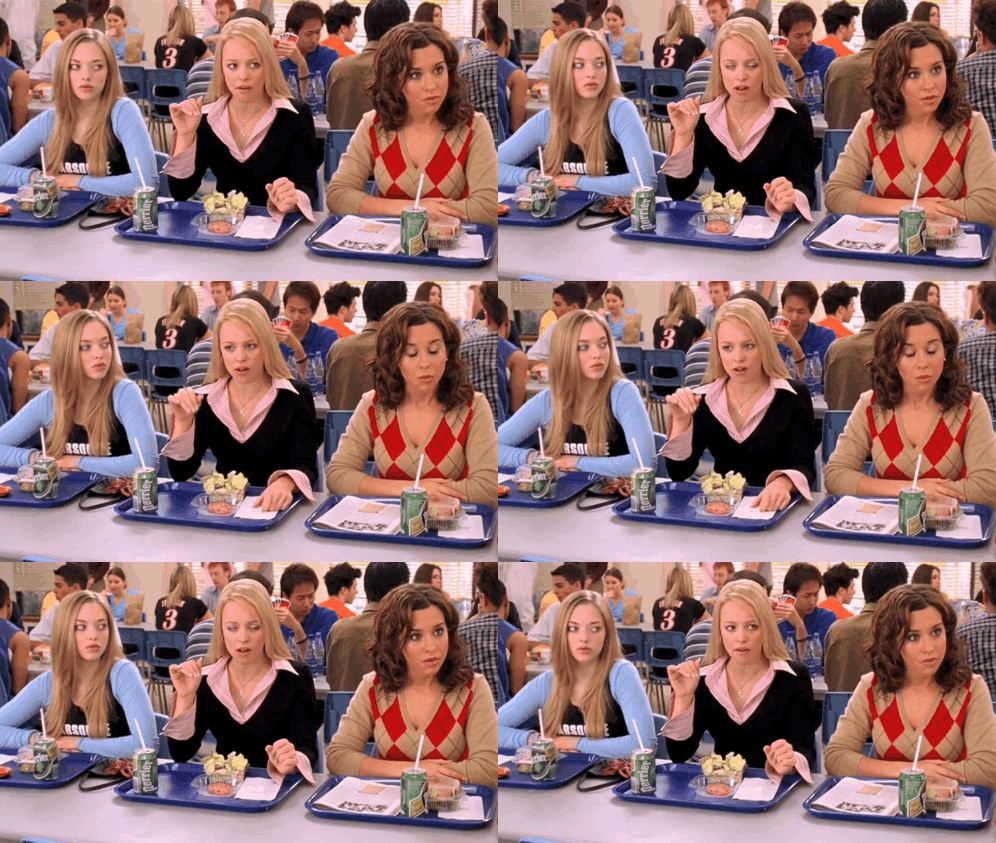
How Table Salt Is Made (Or: How Regina Became Plastics Queen)
Table salt usually comes from two main sources:
- Rock salt mining: Digging ancient salt deposits out of the earth
- Evaporated seawater: Letting seawater dry until salt crystals remain
Once harvested, salt is refined, purified, and stripped of trace minerals, leaving behind those clean, uniform crystals we know and love. Then iodine is often added to prevent iodine deficiency, which can cause thyroid issues, because modern science said we are not letting you suffer for aesthetic minimalism.
This is why table salt looks different from sea salt or Himalayan pink salt. It’s more processed, more uniform, and more consistent. Basically, table salt is the Regina George of salts: polished, controlled, predictable, and in charge.

The Uses: Why Salt Runs This Entire Planet
Salt is absurdly useful. It is doing the most in nearly every area of your life.
1. Cooking & Baking
Salt:
- Enhances flavor
- Balances sweetness
- Controls yeast fermentation
- Strengthens gluten
- Makes chocolate taste more chocolatey
Salt is the reason baked goods don’t taste like bland sadness. It is the difference between meh and oh my god, who made this???
2. Food Preservation
Before refrigeration, salt kept people from dying of food poisoning, which is a strong selling point.
Salted fish. Salted meats. Pickles. Fermented foods. Salt basically said I will not allow botulism to win.
3. Medicine & Health
Salt:
- Maintains fluid balance
- Supports nerve function
- Enables muscle contraction
- Helps regulate blood pressure
Your body is basically a salty soup operating inside a bone mech.
4. Cleaning & Household Hacks
Salt:
- Scrubs cast iron
- Removes stains
- Freshens drains
- Absorbs odors
- De-ices sidewalks
Salt is both delicate flavor enhancer and industrial-grade cleaner, which is honestly impressive range.

The Pros: Why Salt Is That Girl
Let’s not pretend. Salt is iconic.
- Makes food delicious
- Prevents nutrient deficiencies (thanks, iodine)
- Essential for survival
- Preserves food
- Enhances texture and chemistry in baking
Salt is a foundational ingredient in nearly every cuisine across the globe. There is no cultural boundary where salt is not invited. Salt said world tour.

The Cons: When Regina Becomes Unhinged
But like Regina George, salt has a dark side.
1. High Blood Pressure
Too much salt can increase blood pressure, which raises the risk of heart disease and stroke. This is mainly an issue with processed foods, not home cooking.
Your biggest salt villains:
- Fast food
- Packaged snacks
- Frozen meals
- Canned soups
Basically, anything that tastes suspiciously good and shelf-stable.
2. Water Retention & Bloating
Too much sodium causes your body to hold onto water, which can lead to puffiness, bloating, and the feeling that your jeans shrunk overnight.
3. Kidney Strain
Excess salt makes your kidneys work overtime. They did not sign up for this hustle culture.

Table Salt vs. Fancy Salts: Is Regina Better Than Gretchen?
Let’s address the pink elephant in the room.
Is Himalayan pink salt better?
Is sea salt healthier?
Is Celtic salt more “natural”?
Nutritionally? Not really.
Fancy salts may contain trace minerals, but the amounts are tiny. You’re not fixing mineral deficiencies with boutique seasoning. Table salt, especially iodized, is actually more nutritionally functional for most people.
So while fancy salts are cute, aesthetic, and fun for finishing dishes, table salt remains the MVP of daily cooking.
Regina might be mean, but she gets things done.

The Cultural Impact: Salt as Power, Wealth, and Control
Salt shaped global trade routes, fueled colonization, sparked revolutions, and literally built cities. Control salt, and you controlled populations.
This is why governments historically taxed salt heavily. This is why Gandhi led protests over salt laws. This is why salt became symbolic of freedom, labor, and economic justice.
Tiny crystals. Massive power.
Honestly, if salt were a person, she would absolutely be running multinational corporations and manipulating political systems while wearing a flawless blowout.

Final Verdict: So… Is Table Salt a Villain or a Hero?
Salt is morally complex.
It is:
- Necessary
- Powerful
- Occasionally destructive
- Absolutely essential
Like Regina George, salt needs boundaries. In moderation, it elevates everything. In excess, it causes chaos.
Salt is not the enemy. Unregulated processed food culture is.
So season your food. Bake with confidence. Sprinkle generously, but not recklessly. Respect the crystal.
Because without salt, life would be flat. And frankly, we did not survive the 2000s low-rise jeans era just to eat bland food.
Further Reading:
Osborne Wood, F. (2026). “Salt.” Britannica. https://www.britannica.com/science/salt/Occurrence
Thakker, H. (2025). “From Sea to Shelf: How Salt Manufacturers Ensure Purity and Quality.” The Sharad Group. https://thesharadgroup.com/from-sea-to-shelf-how-salt-manufacturers-ensure-purity-and-quality/
Hayasi, N. (2021). “A Pinch of Salt and the One of the Largest Nonviolent Movements in India: The Salt March of 1930.” The Nonviolence Project. https://thenonviolenceproject.wisc.edu/2021/08/19/salt-march/
He, F. J., Appel, L.J., Cappuccio, F.P., de Wardener, H.E. & MacGregor, G.A. (2011). Does reducing salt intake increase cardiovascular mortality? Kidney International, 80(7), 696-698. https://www.sciencedirect.com/science/article/pii/S0085253815551296
Panel on Dietary Reference Intakes for Electrolytes and Water (2005). Dietary Reference Intakes for Water, Potassium, Sodium, Chloride, and Sulfate. Washington, DC: The National Academies Press. https://www.nationalacademies.org/read/10925/chapter/1
National Institutes of Health Office of Dietary Supplements. (2024). Iodine: Fact sheet for health professionals. https://ods.od.nih.gov/factsheets/Iodine-HealthProfessional/
World Health Organization. (2012). Guideline: Sodium intake for adults and children. https://www.who.int/publications/i/item/9789241504836


2 thoughts on “On Wednesdays We Wear Pink, But Every Day We Use Salt: A Deep Dive Into Table Salt”